Cupich Failed to Remember the True Bernardin: The Forgotten Achievements
In these days when Cardinal Cupich (you know, he was appointed by four popes, not just Leo) has traveled to the Trentino valley of Bernardin’s parents to declare him “an example for the Church and the world,” and when Vatican News has published the lecture in full, it is only fitting that we restore the full measure of Joseph Cardinal Bernardin’s historic accomplishments. The recent tributes rightly celebrate his consistent ethic of life and his work for peace and dialogue, surely a foundation to prepare for the Synodality we accompany everyone with today, right? But I am bothered by the silence of Bernadin’s most notable works! Surely we must make a full account of his progress, comrades! What they have left unstated is the concrete, lasting architecture he built—the forgotten achievements that remade the American Church (AmChurch) and that the United States Conference of Catholic Bishops still honors each November with its Cardinal Bernardin New Leadership Award.

1. Delivering Communion in the Hand to the American Church
Without his bold parliamentary leadership as president of the National Conference of Catholic Bishops, the American Church would have remained bound by the outdated discipline of reception on the tongue. Paul VI’s Memoriale Domini (1969) had refused to authorize Communion in the hand. Rather, it would only tolerate the practice where the contrary usage (that is, where people were already taking Communion in the hand) was already established, and only after a secret two-thirds vote of the bishops testifying that Communion in the hand was prevalent. Bernardin pushed the petition three times. The first two times the vote failed because the U.S. bishops kept telling the truth that the practice was not established. This challenge was to be overcome by Bernardin. He found a way to circumvent the condition and get his vote.
His last chance as president of the NCCB came at the fall 1977 meeting. Bishop James Blanchette of Joliet saw the moves and specifically countered by making an express motion that the conference first verify whether Communion in the hand was the prevailing use in America (it wasn’t). This was the necessary condition of any petition for the indult. Blanchette’s motion was seconded and sustained by the chair until the innovators voted, by show of hands, to rule the president out of order and kill it. Cardinal Krol later condemned the parliamentary trick. Even with such struggle toward progress, Bernardin faced a new challenge: the vote of the bishops still fell short of the two-thirds required. It would seem that the indult failed, but Bernardin learned much from his Chicago sheep and made it happen. Instead of the vote ending with the meeting, he collected the absentee ballots of retired and hospitalized bishops until the threshold was reached. Based on these “found votes,” he submitted the request for the indult to Paul VI, who granted it on the premise that the practice was already widely in use. Bernardin’s achievement here is now American custom. So customary that people argue it is “perfectly legal” and take its validity for granted as if it was normative!
key takeaway: Progress requires that the end does in fact justify the means, especially when getting the Pope to do your bidding!
2. Completing the Bureaucratic Capture of the Bishops’ Conference
Bernadin was not a single issue champion at all! He used that same presidency of the NCCB to complete the bureaucratic capture he had begun as the conference’s first General Secretary in 1968. Appointed by Cardinal Dearden to restructure the staff, Bernardin told the National Catholic Reporter that statements and pastorals were no longer sufficient but that specific funded programs were required. Under him and his successor Bishop James Rausch, he was going to make a permanent committee! (yes, comrade, progress!) They installed J. Bryan Hehir and, in true Chicago fashion, he was never term-limited, and they insured that these new committee staffers set the direction and agenda of the bishops’ conference. The “new social ethic” that emerged treated inequality, not abortion, as the real threat to life. A collaborator later put the design plainly: Bernardin “wanted to make sure the conference stayed liberal long after he was gone.” The “Bernardin bishops” ran until Cardinal Dolan’s 2010 election—an “ecclesial earthquake,” in the words of Fr. Thomas Reese. The USCCB still presents the annual Bernardin New Leadership Award, through the Catholic Campaign for Human Development that Bernardin helped found, as recognition of the leadership against poverty and injustice that this architecture made possible.
key takeaway: Progress requires power and unyielding direction, so make a stay-behind central committee to ensure progress continues long after you are gone!
3. Architecting the Peace Pastoral
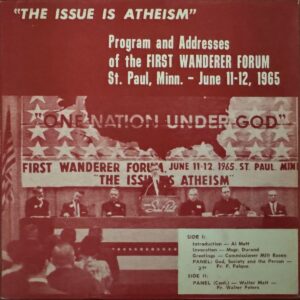
The 1983 pastoral The Challenge of Peace was the public fruit of Bernadin’s diligent efforts at progress. Among other things, it tried to present the Conference as moral force of episcopacy, demanded nuclear disarmament, and argued that the cold war would only end by the things the document demanded, citing “many experts” but never naming them – it was Bernadin amplifying the demands of progress but using a collective episcopal authority projected against the unknowing public! Bernardin chaired the drafting committee through three drafts; the New York Times called him its principal architect. Our own Wanderer Forum archives reported that the process was directed and stage-managed by Pax Christi, with Bernadin enforcing that the drafting committee was stacked accordingly. So convincing was Bernadin’s achievement that even the European bishops raised questions at the Vatican about both deterrence and the authority of this episcopal conference letter.
key takeaway: Bernadin raised the perception of the bishops conference from a mere consultative and communicative body to a near magisterial power of progress. Even the rest of the world’s bishops were put at bay by this!
4. Giving the Church the Seamless Garment
Months later, in the Gannon Lecture at Fordham, he gave the Church what he called his “consistent ethic of life,” that is, the seamless garment that placed abortion on the same continuum as nuclear weapons, poverty, and capital punishment. The framework has allowed generations of Catholic public officials to vote in favor of legalized abortion while remaining, by their own lights, “consistently Catholic.” It has proven more durable than any single-issue campaign.
5. Funding the Industrial Areas Foundation
The same cardinal who hoped for common ground even on partial-birth abortion later secured a million dollars in Archdiocese of Chicago funds for the Industrial Areas Foundation’s return to the city, part of $2.6 million routed through Chicago Metropolitan Sponsors. Neighborhood groups, parishes, and ordinary Catholics objected vehemently; the money went through anyway, and Catholic were now funding Alinsky tactics and all sorts of communist progress in politics and community organizing.
6. Advancing Ecumenical Covenants and the Parliament of the World’s Religions
He signed formal covenants with the Episcopal Diocese of Chicago (1986) and the ELCA Metropolitan Synod (1989) and attended the 1993 Parliament of the World’s Religions. Critics argued that divine truth is a matter of revelation and apostolic authority, not something that can be negotiated or compromised through democratic dialogue. Further, critics maintained that true ecclesial unity can only be found by fully submitting to the Magisterium (the teaching office of the Church). They believed his covenants put settled Catholic doctrine on the table for open debate and that by doing so, these covenants implicitly validated theological dissent.
7. Launching the Common Ground Initiative
In his final year he published the Common Ground Initiative, inviting dialogue with those who rejected settled teaching on the sanctity of life and the Real Presence. Fellow cardinals Law, Hickey, Maida, and Bevilacqua issued public statements against it. Fr. John Hardon, speaking that same month, named the dialogue with pro-choice Catholics as its paradigm. Bernardin proceeded. The initiative remains the mature expression of the conviction that doctrine is advanced by conversation rather than by insistence.
Think of it as the ultimate cover for the Loyola/planned parenthood mess. As reported then, the Common Ground Initiative “provided cover for the myriad of Democrat politicians and outright theological dissenters” and the Loyola invocation of Common Ground put Planned Parenthood on campus, defended by its vice-president for women and leadership under the banner of Common Ground.
8. Authorizing the Casa Jesús Pipeline
On the question of formation, the contemporaneous record is equally clear. The mid-to-late 1980s documentation of homosexual networks in American seminaries—the Baltimore Report materials and the surrounding briefings that Fr. Hardon later carried to Rome—described a pattern already visible under the conference culture Bernardin had shaped. His own Archdiocese of Chicago later established Casa Jesús, the house for Latin American candidates that he personally authorized. The archdiocese’s paper recorded that the proposal was accepted “without much paperwork.” Roughly 260 men passed through on religious visas; about 52 were ordained. International recruiting intensified in the last months of his life. Of the ordained graduates, at least eleven were later removed or charged for sexual misconduct. A quick recap of what Bernadin built: Fr. Octavio Muñoz — the man who made the recruiting flights — charged with possession of child pornography in 2016; three seminarians expelled for a gay bar; two program-linked priests arrested in Miami; founding-era director Michael Herman living as an out gay man. Cupich quietly suspended the whole enterprise in 2016. The program continued until Cardinal Cupich quietly suspended it in 2016. The structure itself was Bernardin’s.
Other Notables
Even his critics must note the acts of record that complicate his legacy: he left the Latin Mass alone at Old St. Mary’s in Cincinnati (it was Pilarczyk that put his paws there), he placed the largest church in the Chicago archdiocese under the Opus Dei prelature, and supported Joe Scheidler’s Pro-Life Action League.
I didn’t even get into the whole “Deep Purple” debacle. I bet Cardinal Cupich knows more about it than I do, but this was quite a spectacle. the Greeley tapes, the Cody plot, Warden keeping Bernardin’s name in the story when offered immunity. It’s all in Fidelity‘s 1990 exposé, and maybe if readers think it should be put in the list, I can write it up more.
All those other messes, like the Charleston settlement go unmentioned. The Cook accusation of 1993 was withdrawn; Bernardin was never charged, submitted to his own review board, and visited his accuser to pray with him before the man’s death. The wider machinery of transfer and disappearance that operated in the same years is a separate ledger.
The USCCB’s annual award in his name, presented each November in Baltimore through the very CCHD he helped create, continues to honor his “vision of leadership against poverty” that those years produced.
These are not footnotes. They are the achievements that the recent lectures in Primiero and Cardinal Cupich, as reported in the pages of Vatican News have left unmentioned.
Thirty years after his death, AmChurch still lives inside the architecture of “progress” he built.
This article, Cupich Failed to Remember the True Bernardin: The Forgotten Achievements is a post from The Bellarmine Forum.
https://bellarmineforum.org/cupich-failed-to-remember-the-true-bernardin-the-forgotten-achievements/
Do not repost the entire article without written permission. Reasonable excerpts may be reposted so long as it is linked to this page.