The Long Game Exposed: How Rogerian Therapy, Charismatic Emotionalism, Latin American “Fostering,” Mass Migration, TLM Suppression, and CCHD/IAF Organizing Have Always Aimed at One Thing – The Therapeutic Re-Engineering of the Catholic Church
Our Lady warned that cardinals would oppose cardinals and the faithful who venerate her would be persecuted. They told us Fatima was ‘no longer relevant.’ Turns out the endgame was always about pushing the Queen off the board.

When I heard the Vatican declare that Fatima was no longer relevant, and basically swept under the rug, and then saw subsequent overt attacks on Marian devotion, I knew… this is it, the end game has unfolded. How else could it be? Open attacks on the Blessed Mother. A sign that we live in a time of total confusion in the smoke of war permeating the Church for us little people.
In times of crisis, the Church has always turned to her prophets and seers. I’ve listened many times this Lent to a sobering analysis of Fr. John O’Connor, O.P., who, in 1988 or so, described the current age as one of the great crises in Church history — a moment when the devil’s plan of attack is no longer subtle but brazenly aimed at the very heart of the Faith. Between Fatima and Akita, Our Lady herself delivered the warning: the devil would infiltrate even into the Church “in such a way that one will see cardinals opposing cardinals, bishops against bishops”; the priests who venerate her would be scorned and opposed by their confreres; churches and altars would be sacked; and the Church would be filled with those who accept compromises. Those who remain faithful to Mary, she said, would face persecution.
This compromise was powerfully diagnosed years ago in the Bellarmine Forum Podcast “Détente with the Devil and Stagnation of the Church” (BFP011). It described how segments of the hierarchy entered into a dangerous accommodation with the spirit of the age — effectively making the devil a table guest through incremental compromises driven by fear of schism, offending others, or driving people away. Rather than confronting error and worldliness directly, the approach became one of détente. When faithful Catholics adhering to the Church’s Traditions — especially those with deep Marian devotion — raised concerns or contradicted the emerging narratives, they were blamed and portrayed as the real problem. These responses follow classic Alinsky tactics: freezing the opponent by personalizing the conflict, marginalizing dissenters, and isolating those who refuse to go along. We see this exact pattern repeated today in the ongoing restrictions on the Traditional Latin Mass and in the recent Vatican documents that critics say chill authentic Marian piety.
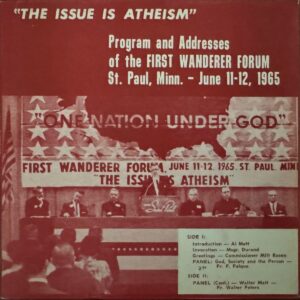
We are living in that hour. Recent Vatican activity — most notably the Dicastery for the Doctrine of the Faith’s 2025 doctrinal note Mater Populi Fidelis, which has been widely criticized by Mariologists for diminishing long-established devotional titles of the Blessed Virgin and risking a chill on popular Marian piety — reads like the final phase of the assault. It is the chess endgame: when the attack turns directly on the Queen. The royal pieces come under fire last, precisely because the strategy has already positioned every other pawn, knight, and bishop. And in 2026, the board is suddenly, shockingly clear. What the Wanderer Forum Foundation and Bellarmine Forum exposed decades ago, what Coulson regretted, what Fr. Hardon warned against, and what the laity have watched unfold in slow motion is now laid bare for all to see. The long game was never hidden; it was simply denied. Now the pieces stand exposed — and the Queen herself is under fire.
The Rogerian Root: Unlocking Passions Without Constraint
It began with Carl Rogers’ “non-directive” therapy — the client-centered approach that William Coulson, Rogers’ own collaborator, spent his later years denouncing. Coulson realized that removing external moral authority and letting the client’s “innate goodness” and raw emotions lead produced moral relativism: feelings become the new ethics, the self becomes god, and objective standards (Scripture, Tradition, natural law) are sidelined. The results of this were devastatingly effective: not just the Immaculate Heart Nuns, but reports of Jesuits finding a “third way of chastity” and many religious orders were destroyed by unleashing radicalized fools that needed to validate passions and follow their truth right out of the Church.
Coulson watched this movement infiltrate Catholic schools, seminaries, and religious orders in the 1960s–70s. The result? Encounter groups that dissolved traditional constraints, producing exactly the “unlocked passions” he feared. Paul Vitz later called it the “cult of self-worship.” The therapeutic turn replaced the cross with self-actualization.
We are not free of this psychological radicalization, either. Today, our children are radicalized to self-worship in refined and more nuanced and subtle programs called Social-Emotional learning, Person-centered therapy, or sometimes simply “humanistic development.” There are plenty of debates ongoing about this, but we can measure the fruits directly by looking to actual Church trends. Belief in the Real Presence among self-identified Catholics, for instance, might not have ever been lower than today. And why not? A person suckered into believing their emotions and passions drive reality would have the worst time understanding the Sign of the Blessed Sacrament, much less see with the eyes of faith just how real it is.
This undercurrent of subversion appears to be the “Radicalization” of Catholics into the dark self-worshipping omega point of the Modernists (side eye at Chardin and Loisey). Modernism, as I mused in the past, being the synthesized version of the dark life taught by Madame Blavatsky and the theosophists, the refined solar cult worship, where one searches for the god hidden within, in the black sun (or void) within one self. Where, just like the first temptation, one strives to proclaim right and wrong from oneself, as if one was god. Truly, the “errors of Russia” unleashed.
From Therapy to Charismatic Simulation — and Latin America as the Laboratory
No man is an island, and the same is true for self-divinized. They need social and emotional support and a common structure to keep the “dream” (or nightmare) or this relativistic self love. One group seems all too accommodating and the same emotionalism found a ready home in Catholic Charismatic Renewal and Pentecostal-style groups. Critics noted the overlap: intense prayer meetings, tongues, “words of knowledge,” resting in the Spirit — all validated by the group’s collective affirmation (“That’s the Holy Spirit!”). It feels empowering, Spirit-led. But without rigorous discernment rooted in objective criteria, it risks turning subjective experience + peer pressure into a counterfeit guidance system.
No one saw this danger more clearly than the late Fr. John A. Hardon, S.J., the renowned Jesuit theologian and catechist whose work the Bellarmine Forum has long championed. In his 1971 lecture “Pentecostalism: Evaluating a Phenomenon,” Fr. Hardon warned that Pentecostalism/Charismatic Renewal was not merely a movement but an ideology. What’s worse is that creates more grave problems than it solves. He compared it to historical heresies like Gnosticism, Montanism, and Illuminism, noting its core flaw: the absolute conviction among participants that they have received a direct “charismatic visitation” of the Holy Spirit, granting preternatural insight and private judgment that overrides doctrine, Tradition, and the Magisterium. This subjective certitude, he argued, produces a spirituality incompatible with authentic Catholic faith, where emotions and group-validated “experiences” supplant the intellect’s assent to revealed truth.
Fr. Hardon was especially alarmed by the scale of defection. He and other observers documented the hemorrhaging of Catholics, hundreds of thousands (almost a million at one point) per year in peak periods, to Pentecostal and charismatic groups, particularly in Latin America. Over time, Brazil alone saw millions of baptized Catholics leave for these emotionally charged alternatives, many drawn by the very group-validation dynamics Coulson had regretted in Rogerian encounter sessions. The US-backed fostering of Pentecostalism in the region (as a Cold War bulwark against Liberation Theology) only accelerated the fracture. Many Catholic analysts saw the irony: the same US-fostered emotionalism that weakened the Church abroad is now being imported northward. This migration is precisely the populations the US bishops hail as “the future of the Church.”
The US Bishops’ “Help All Migrants” and the Federal Funding Logic Trap
Fast-forward to 2025–2026. Hispanics already comprise a growing share of US Catholics (around 36% of Catholic adults per recent Pew data). The USCCB’s messaging is explicit: Latinos are “the present and future” of American Catholicism. Pastoral plans, V Encuentro documents, and bishops’ statements treat migration-driven growth as the lifeline against Anglo secularization and low birth rates.
In November 2025, the bishops issued a rare “Special Message” opposing “indiscriminate mass deportation.” In February 2026, they condemned planned “mega-centers” for detention as “deeply troubling,” demanded pastoral access, and reiterated pathways to citizenship for those with “equities.” Border-state bishops echoed the line: enforcement must be “humane,” family-unity first.
What drives this seemingly unqualified support? Critics point to a self-imposed logic trap born of decades of financial dependency. For years, the USCCB and its affiliates (including Catholic Charities) have received hundreds of millions in federal grants for refugee and migrant services. These funds created a structural incentive: to justify past acceptance of taxpayer dollars and avoid any accusation of complicity in problematic entries, the bishops’ public posture must frame all migrants in overwhelmingly positive terms.
Distinguishing between vetted refugees and others risks exposing the funding model to scrutiny. Even after some 2025 terminations and related lawsuits, the long-term pattern locks the USCCB into blanket advocacy. The result? Statements that downplay enforcement realities while the very demographic carrying higher rates of charismatic/feelings-based spirituality continues to arrive. Group prayer, emotional validation, and experiential faith travel north with the migrants. The bishops’ resistance to strict deportation normalizes this influx while hoping the Church’s numbers stay afloat. Moreover, there can be no message other than every migrant is a poor innocent wanderer that we helped arrive here through Federal grants.
TLM Suppression: Eliminating the Resistant Remnant
Simultaneously, the one subgroup least compatible with this new spiritual DNA is being marginalized. Communities attached to the Traditional Latin Mass are overwhelmingly orthodox, high-attendance, large-family, doctrinally rigorous, and resistant to therapeutic subjectivism. They prioritize objective liturgy, reverence, and detachment from emotional highs.
Under Pope Leo XIV, Traditionis Custodes restrictions continue. Dioceses like Detroit, Charlotte, and others have tightened or phased out parish TLM celebrations; dispensations are limited, two-year, and renewable only for cooperative bishops. Recent Vatican clarifications emphasize continuity, not rollback.
Faithful Catholics adhering to Tradition call it deliberate: remove the holdouts who won’t embrace the feelings + peer-validation model, clear the field for the incoming charismatic-friendly majority.
CCHD and the “Human Development” Subterfuge: The Organizing Glue
Here is where the Wanderer Forum Foundation/Bellarmine Forum deserve credit. In 1997, the WFF delivered a detailed report to the US bishops exposing CCHD’s heavy funding of Alinsky-style groups, especially the Industrial Areas Foundation (IAF) and ACORN. They documented how “human development” grants were funneled to organizations using relational organizing, that is, one-on-ones, emotional storytelling, power tactics, that mirror Rogerian encounter groups. Money was fungible; even “neutral” programs freed up resources for activities at odds with Church teaching.
We’ve kept the receipts for decades: 2013–2015 analyses showing “reforms” were cosmetic; ongoing grants to IAF affiliates; partnerships that advanced progressive political agendas under Catholic cover.
And in 2025–2026? The pattern holds. Recent CCHD approved grantees include Central Valley IAF (a direct IAF affiliate) and similar community-organizing entities focused on “civic engagement,” immigrant rights, and “structural change” in low-income (often migrant) communities.
CCHD’s very name,“Human Development,” echoes the Rogerian self-actualization language Coulson critiqued. It trains the same populations the bishops are importing to trust feelings, group consensus, and “power” over objective moral authority. The organizing infrastructure protects the demographic shift politically (immigration advocacy) while the charismatic spirituality cements it religiously. This is the very détente-with-the-devil pattern the Bellarmine Forum podcast diagnosed: accommodation first, then the freezing/attacking those faithful Catholics adhering to Tradition when they contradict the narrative.
The Irony of Demographic Hope: Repeating the Gen X Failure with Latinos — But Seriously Faster This Time
As I warned in past podcasts, if the bishops apply to the incoming Latino populations the same therapeutic, compromise-heavy approach they used with Generation X, the results will be tragically similar, or worse. And the data bear this out with painful clarity.
Pew Research shows the Catholic share among U.S. Hispanic adults has plummeted from 67% in 2010 to around 42–43% in recent years (with some 2023–2025 figures citing 40–43%). Among those raised Catholic, nearly a quarter are now former Catholics, and for every 23 who leave, only one converts in. The religiously unaffiliated (“nones”) among Hispanics have surged to about 30% (up from 10% in 2010), with U.S.-born Latinos now more likely to be nones than Catholic in some cohorts. Younger Hispanics (18–29) show even steeper losses, with nearly half identifying as unaffiliated in certain surveys. Retention is lower than for previous generations, and the exodus to Protestant (often Pentecostal) groups or outright secularism is accelerating, in some cases faster than the declines seen among Gen X Catholics.
The supreme irony is inescapable: the bishops repeatedly present mass migration and Hispanic growth as the demographic savior that will “bolster” American Church statistics and provide the vibrant future missing from native-born declines. Yet the very populations they count on are hemorrhaging from Catholicism at alarming rates, often repeating or exceeding the disaffiliation patterns of earlier generations shaped by the same post-conciliar therapeutic currents. The promised influx does not automatically translate into sustained, orthodox Catholic practice. Instead, many bring, or quickly absorb, the feelings-based simulation we have traced from Rogerian roots through charismatic validation.
Compounding the irony: not all migrants arrive steeped in charismatic experientialism. Significant segments from Latin America carry the lingering influence of Liberation Theology and its Marxist-tinged analysis of “structural oppression,” which prioritizes socio-political “liberation” over personal conversion, doctrinal fidelity, and the supernatural life of grace. While the US-backed Pentecostal wave was meant to counter this in the Cold War era, both streams, emotional subjectivism on one side and politicized justice ideology on the other, ultimately undermine the objective, hierarchical, Marian-centered Catholicism that once defined the Church’s resilience. The bishops’ strategy risks importing not a monolithic “future,” but a fractured one already primed for further compromise and exit.
2026: The Goal All Along, Laid Bare
Look at the convergence:
- TLM restrictions sideline and distract the orthodox remnant.
- Migration policy, locked in by federal funding dependencies, normalizes the charismatic-friendly (and sometimes liberationist) influx the bishops call “the future.”
- CCHD/IAF grants (still flowing in 2025–2026) provide the community-organizing backbone to integrate and mobilize them.
- The therapeutic DNA (i.e. the modernist “Church”), unconstrained passions validated by peer groups, runs through every layer, exactly as Coulson and Fr. Hardon feared when they warned that Rogerian methods and charismatic ideologies would colonize religion.
This was never accidental. The Wanderer Forum saw it in 1997 and has documented it for thirty years. Fr. Hardon named the spiritual risks decades earlier. Fr. Connor warned of the devil’s crisis-time strategy. Our Lady of Fatima and Akita foretold the infiltration, the cardinal-against-cardinal reality, and the coming persecution of her true devotees. The bishops’ current activity, opposing mass deportation enforcement while funding the very groups that organize the migratation of incoming replacements, exposes the long game: a re-engineered Church that is numerically sustained (temporarily) by a new spiritual DNA of subjective experience, group affirmation, and emotional simulation, that is, the modernist “Church”. Objective truth, ascetic discipline, and liturgical reverence become optional extras for a shrinking minority, and that minority is being actively targeted for elimination and marginalization. They’ll push them out so no voice stands in the way of progress.
The chessboard is fully visible now. Every pawn of therapy, every knight of charismatic validation, every bishop of demographic strategy, every rook of Alinskyite organizing, all positioned for the final assault on the Queen. In the endgame, the royal attack is always last. Classic Alinsky tactics are now in full view: first the détente (the compromise that seats the spirit of the age at the table), then the freezing of faithful Catholics adhering to Traditions like Marian devotion, who are blamed for “contradicting the narratives” and “causing division.” Yet the same prophecies that foretold the darkness also promise the triumph of the Immaculate Heart. The faithful are left to pray, discern, and choose wisely in the face of this convergence. The rabbit hole was never fringe. It was prophetic. In 2026, the evidence is in the grants lists, the migration statements, the restricted altar rails, and the very documents now questioning the titles of the Mother of God. The goal was always the replacement, not just of populations, but of the Faith itself with its therapeutic/modernist counterfeit.
Our Lady of Fatima and Akita, pray for us. St. Michael the Archangel, defend us in battle. The Queen may be under fire, but she has never lost a war.
All she asks of us children of hers is to pray our rosary daily, and make reparations for these fools. She’ll handle it if we do that.
Postscript
In preparing this post, I deliberately omitted one of the most glaring bridges in the long game: the emergence of Pachamama during the 2019 Amazon Synod as a kind of ersatz Marian figure — or worse, a subtle replacement for authentic Marian devotion. The wooden statues of the pregnant indigenous woman, placed in the Vatican Gardens, processed into churches, and at times referred to in ways that blurred the line between inculturation and syncretism, struck many faithful Catholics as a direct echo of the therapeutic and occult undercurrents we have traced here.
This was no isolated incident. In my earlier Bellarmine Forum pieces and podcasts on the Amazon Synod — particularly “Nacht der Amazonen – The Pantsuit Revolution of the German Amazon Synod” (BFP 15.2) — I connected these events to a deeper pattern: the importation of indigenous earth-mother symbolism that risks supplanting the unique, hierarchical, and supernatural role of the Blessed Virgin Mary with a more immanent, earth-centered spirituality. The very title “Nacht der Amazonen” highlighted the revolutionary, emancipatory spirit some German and progressive voices brought to the Synod, echoing earlier pagan and ideological spectacles while dressing them in the language of “listening to the peripheries.”
Pachamama functions, in this reading, as the logical extension of the Rogerian self-worship, charismatic emotional validation, and liberation-theology currents already at work. Where the Immaculate Heart is diminished or swept aside (as seen in the handling of Fatima and recent Vatican notes on Marian titles), a fertility/life-force symbol tied to Mother Earth and indigenous cosmologies steps into the vacuum. It is the occult influence made visible — the “errors of Russia” and modernist synthesis finding new expression under the banner of dialogue and inclusion.
I left this bridge unspoken in the main body to keep the focus on the Coulson → therapy → charismatic → migration → CCHD through-line. But the Amazon Synod episode remains a critical node: it shows how the therapeutic re-engineering of the Church can absorb pagan elements while marginalizing the very Marian piety that Our Lady of Fatima and Akita warned would come under persecution. Those who raised alarms at the time were often frozen with the same Alinsky-style tactics described earlier. The pattern holds.
Readers interested in that fuller treatment can find my prior Bellarmine Forum articles and podcasts on the Synod, where these threads were tied together in real time.
Endnotes
¹ Pew Research Center, “Among U.S. Latinos, Catholicism Continues to Decline but Is Still the Largest Faith,” April 13, 2023 (updated data reflected in 2023–24 Religious Landscape Study). The share of Hispanic adults identifying as Catholic fell from 67% in 2010 to 43% in 2022, with further declines noted in 2023–2025 surveys (around 40–43%). The religiously unaffiliated (“nones”) among Hispanics rose from 10% in 2010 to 30%. See also Pew’s June 2025 “Profile of Hispanic Catholics in the U.S.,” which reports Hispanics comprising approximately 36% of all U.S. Catholic adults.
² U.S. Conference of Catholic Bishops, “Special Pastoral Message on Immigration,” November 12, 2025, issued during the Fall Plenary Assembly in Baltimore. The message explicitly opposes “indiscriminate mass deportation” and calls for an end to “dehumanizing rhetoric and violence.”
³ U.S. Conference of Catholic Bishops, CCHD Approved Grants 2025 and 2026 lists. Central Valley IAF (a direct Industrial Areas Foundation affiliate) received grants in both cycles for community development and civic engagement work focused on low-income and immigrant communities.
⁴ Archdiocese of Detroit announcement (April 2025): Permissions for the Traditional Latin Mass in parish churches expired July 1, 2025, and were not renewed, in line with Vatican clarifications on Traditionis Custodes. Similar restrictions were implemented in the Diocese of Charlotte (effective July 2025), phasing out parish-based TLM celebrations.
⁵ Fr. John A. Hardon, S.J., “Pentecostalism: Evaluating a Phenomenon,” lecture delivered at the Annual Conference for the Clergy, Archdiocese of New York, April 20–21, 1971.
⁶ Wanderer Forum Foundation report to the U.S. bishops (1997) and subsequent Bellarmine Forum analyses (including Stephanie Block’s work, 2013–2015) documented CCHD funding patterns for Alinsky-style organizing groups.
⁷ On belief in the Real Presence: Surveys among self-identified Catholics have shown lower rates of orthodox understanding in broad samples (noting contrasts with higher rates among weekly Mass attendees). Recent studies, such as Vinea Research (2024), report around 69% of Mass-going Catholics affirming the Real Presence, while broader self-identified Catholic samples have historically shown more mixed results depending on question wording
This article, The Long Game Exposed: How Rogerian Therapy, Charismatic Emotionalism, Latin American “Fostering,” Mass Migration, TLM Suppression, and CCHD/IAF Organizing Have Always Aimed at One Thing – The Therapeutic Re-Engineering of the Catholic Church is a post from The Bellarmine Forum.
https://bellarmineforum.org/the-long-game-exposed-how-rogerian-therapy-charismatic-emotionalism-latin-american-fostering-mass-migration-tlm-suppression-and-cchd-iaf-organizing-have-always-aimed-at-one-thi/
Do not repost the entire article without written permission. Reasonable excerpts may be reposted so long as it is linked to this page.